Adaptive Cardiac Resynchronization Therapy Effect on Electrical Dyssynchrony (aCRT-ELSYNC): A randomized controlled trial
Abstract
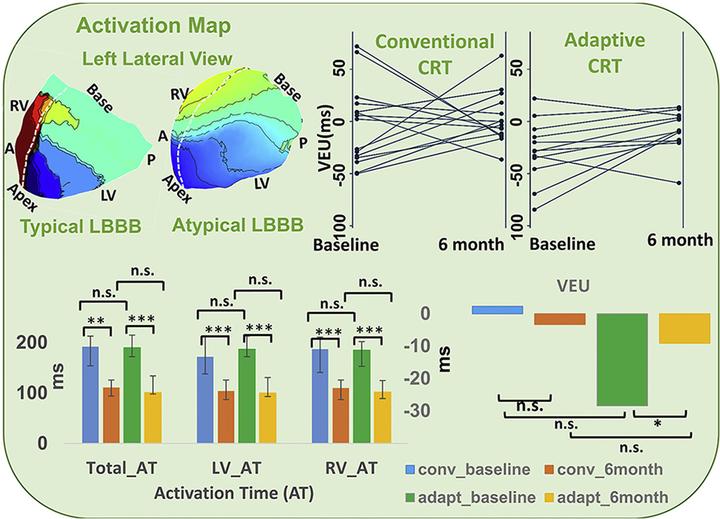
Background: Adaptive cardiac resynchronization therapy (aCRT) is known to have clinical benefits over conventional CRT, but the mechanisms are unclear.
Objective: Compare effects of aCRT and conventional CRT on electrical dyssynchrony.
Methods: A prospective, double-blind, 1:1 parallel-group assignment randomized controlled trial in patients receiving CRT for routine clinical indications. Participants underwent cardiac computed tomography and 128-electrode body surface mapping. The primary outcome was change in electrical dyssynchrony measured on the epicardial surface using noninvasive electrocardiographic imaging before and 6 months post-CRT. Ventricular electrical uncoupling (VEU) was calculated as the difference between the mean left ventricular (LV) and right ventricular (RV) activation times. An electrical dyssynchrony index (EDI) was computed as the standard deviation of local epicardial activation times.
Results: We randomized 27 participants (aged 64 ± 12 years; 34% female; 53% ischemic cardiomyopathy; LV ejection fraction 28% ± 8%; QRS duration 155 ± 21 ms; typical left bundle branch block [LBBB] in 13%) to conventional CRT (n = 15) vs aCRT (n = 12). In atypical LBBB (n = 11; 41%) with S waves in V5-V6, conduction block occurred in the anterior RV, as opposed to the interventricular groove in strict LBBB. As compared to baseline, VEU reduced post-CRT in the aCRT (median reduction 18.9 [interquartile range 4.3–29.2 ms; P = .034]), but not in the conventional CRT (21.4 [-30.0 to 49.9 ms; P = .525]) group. There were no differences in the degree of change in VEU and EDI indices between treatment groups.
Conclusion: The effect of aCRT and conventional CRT on electrical dyssynchrony is largely similar, but only aCRT harmoniously reduced interventricular dyssynchrony by reducing RV uncoupling.

Jason Thomas, PhD
Healthcare Data Operations & AI/MLOps Platform Leader | Multimodal Medical Data & Partnerships
I build healthcare data, AI/MLOps, and governance foundations that turn complex medical data into durable assets for product AI, validation, analytics, and real-world evidence.